Arrests of Human Rights Defenders Continue
As Nayib Bukele completes the first year of his unconstitutional second presidential term, political persecution of human rights defenders intensifies in El Salvador.
On May 12, pastor and president of the El Bosque Cooperative in Santa Tecla José Ángel Pérez was arrested during a peaceful protest near Bukele’s residence that was brutally repressed by riot police and military police. The following day, lawyer and environmental leader Alejandro Henríquez was arrested. Henríquez, a leader with youth environmental movement Reverdes and The National Water Forum, had been accompanying the three hundred families of the cooperative throughout the legal process. While the protest was successful in having the eviction order repealed, Henriquez and Pérez remain in jail and their families and lawyers have been largely unable to communicate with them.
Two of El Salvador’s largest social movement coalitions, the Popular Rebellion and Resistance Bloc (BRP) and the Movement to Defend the Rights of the Working Class (MDCT), held a joint press conference to denounce the arrests and crackdown on the protest, which was largely made up of children and elders from the community. At the press conference, Rafael Paz Narvaez of the Critical Thought University Movement, a member-organization of the BRP, decried that “This is not the first time that this government has promoted the seizure of land belonging to the popular class.” Narvaez went on to list a handful of the more than 20 communities all over the country that are at risk of being displaced, including those whose lands were seized to build the CECOT prison and a future airport in the La Union department.
The next day, the two coalitions held a protest near the jail where Henríquez and Pérez were being held, calling for their release. Dozens of police surrounded the protest, preventing the group from reaching the jail.
Less than a week later, police arrested one of El Salvador’s most prominent attorneys, Ruth López, the head of the Anti-Corruption and Transparency Unit at international human rights organization, Cristosal. Police coaxed López from her house in a late-night operation, claiming that they were investigating an accident involving her car. She was then placed under arrest and forced to change out of her pajamas in front of onlooking neighbors and police. Her family was not informed of her whereabouts until two days later, following a press conference in which her mother, Eleanora Alfaro, held Bukele personally responsible for López’s detention. “I demand that President Nayib Bukele release my daughter, because he is the one who gave the order for her to be arrested,” she said.
At Cristosal, López has led more than 15 investigations into government abuse and corruption. In December, she was included in the BBC’s list of 100 inspiring and influential women throughout the world.
International condemnation of the arrests in both cases has been widespread and swift. The United Nations Special Rapporteur on Human Rights Defenders Mary Lawlor called for the release of Henríquez and Pérez, stating that “Nobody should be criminalized for defending human rights.”
Over 100 organizations from 21 countries, including environmental, faith and international solidarity organizations, issued a statement calling for the immediate release of Henríquez and Pérez, as well as an end to the State of Exception and the criminalization of land and water defenders. “It is deeply alarming that the repression, intimidation, and criminalization of community leaders who organize peacefully to defend their communities against violent eviction processes has become a common practice in El Salvador. Equally concerning is the aggressive persecution of lawyers and human rights defenders who provide legal advice and accompaniment to communities facing eviction.”
On May 19, Amnesty International, Human Rights Watch, and others condemned López’s arrest in a statement calling for her “immediate release” and characterizing Bukele’s use of the State of Exception “as a tool to silence critical voices.” Members of the U.S. Senate Foreign Relations Committee have spoken out, including Ranking Member Jeanne Shaheen (D-NH) and Chris Van Hollen (D-MD), as have Representatives Chuy García (D-IL), Delia Ramírez (D.-IL), and Gregory Meeks (D-NY). Senator Peter Welch (D-NH) also criticized López’s arrest, stating in a post on X, “President Bukele is a corrupt dictator determined to stamp out any criticism.”
The recent arrests are part of a wave of repression against organized communities and human rights defenders. In February, dozens of members of the La Floresta community in San Juan Opico were arrested as they also attempted to resist the eviction of over one hundred families. Prominent human rights defender Fidel Zavala, of the Community and Human Rights Defense Unit (UNIDEHC), who had previously denounced torture and abuses he witnessed in two of El Salvador’s prisons, was arrested in relation to the case, and, on May 5, a judge issued arrest warrants for UNIDEHC lawyers Ivania Cruz and Rudy Joya.
Immediately following the repression of the cooperative’s vigil, Bukele announced on May 13 he would be sending a bill to the Legislative Assembly which would heavily tax non-governmental organizations that receive foreign funding. The new Foreign Agents Law, which the legislature approved on May 20, will require individuals and organizations to register as foreign agents and prohibit them from “carrying out activities for political or other purposes, with the aim of: altering public order...” United Nations Special Rapporteur on the Rights to Freedom of Peaceful Assembly and of Association Gina Romero said of the bill: “Labeling those who receive legitimate funds as 'foreign agents’ stigmatizes, silences, and weakens the civic fabric of the country. It is not compatible with a democratic society.”
The arrests followed a new poll by the Center for Public Opinion, showing that Bukele’s approval rating has slipped to 55%, the lowest in his six-year tenure.
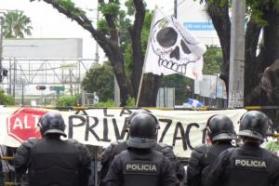
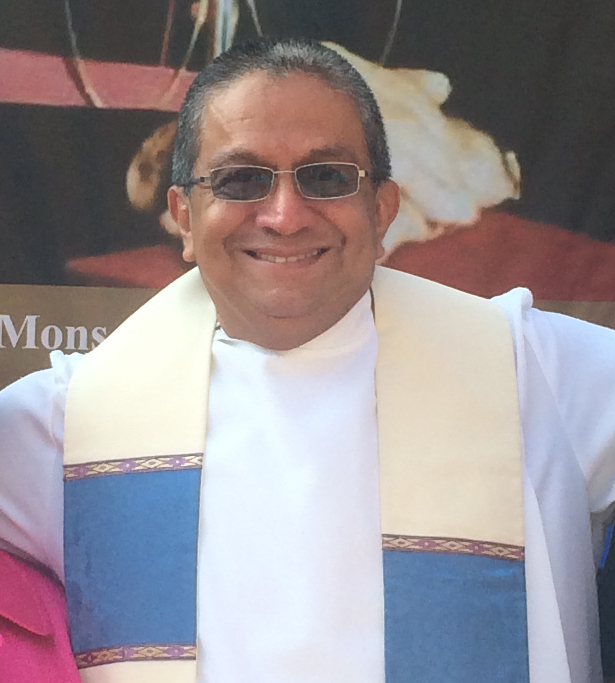 "I am a CISPES supporter because continuing to fight for social justice and a more people-centered country means continuing the dream and sacrifice of thousands of my fellow Salvadorans who died for that vision.” - Padre Carlos, New York City