Concerns Arise in First Month of New US Ambassador
On September 22nd, Mari Carmen Aponte, President Obamaappointee, was sworn in as the new US Ambassador to El Salvador, filling thepost evacuated last January after President Obama’s inauguration. Many in theUS and El Salvador have high expectations for the new US Ambassador todemonstrate a new attitude of “mutual respect” for the sovereignty of LatinAmerica, as promised by the President. However, in El Salvador - historic grounds of extreme and devastating USintervention - there has been growing concern that Aponte will continue theinterventionist US agenda of her predecessors.
Insome respects, Ambassador Aponte represents a marked departure from pastambassadors, as a bilingual Puerto Rican woman. Ambassador Aponte is a lawyer and former director of thePuerto Rican Federal Affairs Administration (2001-2004). She has also served onthe boards of the National Council of La Raza (NCLR), the Puerto Rican LegalDefense and Education Fund and the University of the District of Columbia. Herexperience, in advocating for the rights of Latinos/as, particularly with NCLR,provides her with greater degree of familiarity with the serious social andeconomic issues that Salvadorans confront.
Regardlessof Aponte’s background or personal views, US State Department policy in LatinAmerica itself has thus far failed to demonstrate “mutual respect” in theregion. Perhaps the most glaringexample is the continued US support for the murderous regime of Pepe Lobo inHonduras, who came into power after the overthrow of democratically-electedPresident Manuel Zelaya in a coup d'état in June of 2009. In El Salvador today, Aponte appears tobe fulfilling her role to the letter as the premier representative of the USState Department.
Inlate October, Ambassador Aponte, US Embassy staff, Salvadoran business eliteand right-wing political leaders attended a conference hosted by Cubannational, Carlos Alberto Montaner, invited to speak by a Salvadoran business association.
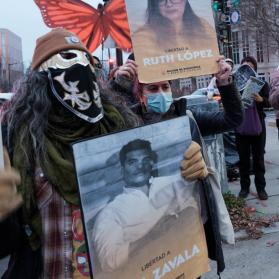
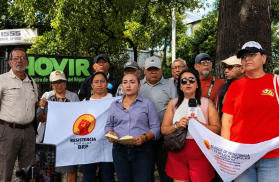
Insidethe conference center, Ambassador Aponte greeted Montaner, shook his hand andwelcomed him to the country; outside, members of El Salvador's socialmovement-including unionists, students and FMLN members protested Montaner’spresence, calling it a clear sign of plans to destabilize the Funes government.
Noaverage business leader, Montaner has been named in US intelligence reports asone of the individuals aware of the Salvadoran right-wing plans to massacre sixJesuit priests, their housekeeper and her daughter at El Salvador’s CentralAmerican University (UCA) in 1989. More recently, Montaner was reportedly present in Honduras in the months before the coup, as wellas in Venezuela in 2002, Bolivia in 2008 and Ecuador this year in the monthsprior to coup attempts in these countries. Montaner also has close ties toAlejandro Pena Esclusa, who financed much of the fear campaign againstthen-FMLN presidential candidate Mauricio Funes in 2009. The Salvadoran socialmovement and FMLN members are pointing to such meetings organized by Salvadoranelites - including the recent visit by Honduran coup leader Roberto Micheletti- as alarming indicators of right-wing plans to undermine El Salvador’s firstleft government.
TheAmbassador’s sheer willingness to dialogue with Montaner, a shadowy ally of theSalvadoran hard right, directly counters important steps made by PresidentFunes towards addressing the deep historical wounds and legacy of Stateimpunity that endure from El Salvador’s 12-year, US-backed Civil War. Funes hasrepeatedly denounced the Salvadoran government’s role in the massacre ofArchbishop Romero, as well as the assassinations, torture and forceddisappearance of tens of thousands of Salvadorans.
TheMontaner meeting is not the only alarming signal of a continuation ofinterventionist policies from the Embassy. Robert Blau, a high-ranking officialunder former-Ambassador Charles Glazer, will stay on in the Embassy as Aponte’stop political advisor. Glazer plainly admitted to a CISPES Fact-FindingDelegation in July of 2008, in advance of El Salvador’s 2009 presidentialelections, that the US had intervened in El Salvador’s 2004 presidentialelections, referring to threats made by Members of Congress and BushAdministration officials that all remittances sent by Salvadorans in the US totheir families back home would be eliminated if the leftist FMLN presidentialcandidate won. Although Glazer isgone, Blau who was the former Ambassador’s second-in-command remains to counselAponte.
SinceAponte’s arrival in the US Embassy, no less than four anti-mining movementleaders have been denied visas to the US. Two leaders invited for a CISPESspeaking tour, a lawyer invited by the Organization of American States totestify on threats faced by the movement and a member of the community radiocollective, Radio Victoria, were all refused visas, supposedly failing to proveadequate economic ties to their home country (profiles of the CISPES invitedguests, pg. 2). As a consequence,US audiences have lost the opportunity to hear the testimony of their struggleagainst the North American mining industry and the $200 million in lawsuits thecountry now faces, under the US-Central American Free Trade Agreement(CAFTA-DR). The visa denials appear to be part of a wider State Departmenttrend of silencing dissenting voices from Latin America. Visas were recentlydenied to Honduran and Costa Rican activists slated to speak at the annualvigil in Fort Benning, GA - site of the infamous US training academy for LatinAmerican military, the School of the Americas.
AmbassadorAponte has certainly made a splash in her first weeks as US Ambassador;associating with a shadowy figure from El Salvador’s bloody past, maintaininginfluential staff from the former Ambassador and overseeing an alarming rash ofvisa denials. Should the newAmbassador intend to carry out the US State Department’s regional agenda overher two-year term, it does not bode well for open and honest diplomaticrelations with El Salvador, despite high expectations for change.
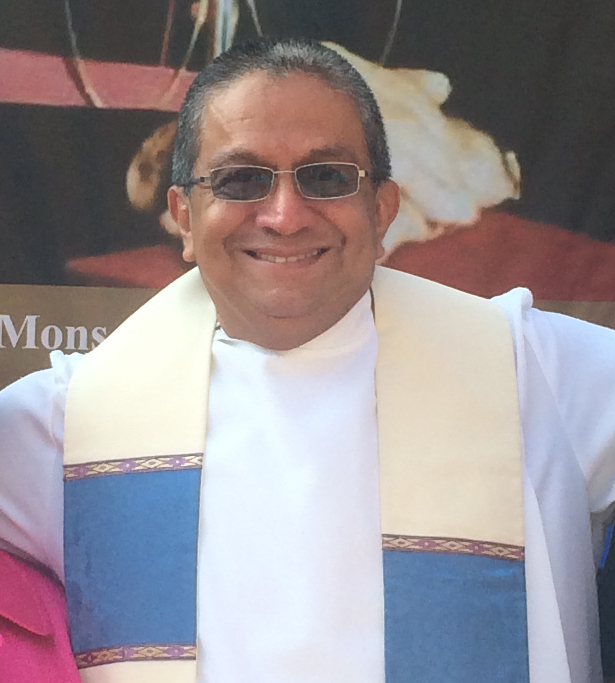 "I am a CISPES supporter because continuing to fight for social justice and a more people-centered country means continuing the dream and sacrifice of thousands of my fellow Salvadorans who died for that vision.” - Padre Carlos, New York City