El Salvador Signs Second MCC Compact, Concerns Remain
After a delay of over a year, on Tuesday, September 30, representatives of the United States and El Salvador finally signed the much-disputed $277 million Millennium Challenge Corporation (MCC) five-year development compact. The MCC board approved the compact last year, but the signing was delayed by a series of controversial US demands on Salvadoran policy as conditions for the fundings’ disbursement.
This is El Salvador’s second MCC compact; the first (2007-2012) was a $461 million investment whose principal project was the construction of the Northern Longitudinal Highway, which faced significant community resistance. The second compact focuses on developing coastal highways and tourism projects through public-private partnerships.
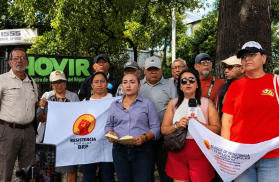
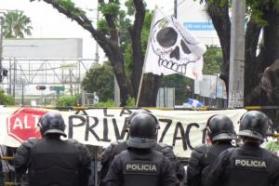
Last year, as a requisite for the compact’s approval the US Embassy pushed forward a Public-Private Partnership Law that was opposed by social movement activists who considered it a renewed effort to privatize public services and infrastructure. This summer, the US raised a new demand that El Salvador revise a mechanism in its lauded Family Agricultural Plan that allowed the government to purchase seeds from local producers, who had previously been kept out of the bidding process in favor of transnational agribusinesses. The move sparked outrage from the Salvadoran social movement, US organizations and policy-makers alike. David Saldivar of Oxfam America pointed to the troubling nature of the US’s policy impositions, writing that, “attaching new conditions after a compact has been negotiated and approved by the MCC board comes uncomfortably close to replicating the worst history of conditionality in development aid, where reforms aim mainly at donor interests, or become a box-checking exercise to release aid funds.”
The agreements’ signing is a positive gesture of US willingness to work with the newly elected leftist Farabundo Martí National Liberation Front (FMLN) administration of President Salvador Sánchez Cerén. Nevertheless, coastal communities have voiced serious concern about the social and environmental impacts of the proposed projects, fearing that “the consequence of MCC/FOMILENIO and related investment projects will be the predation and contamination of the coastal region of El Salvador, as well as the eviction of the peasant communities that have traditionally lived sustainably in the region.”
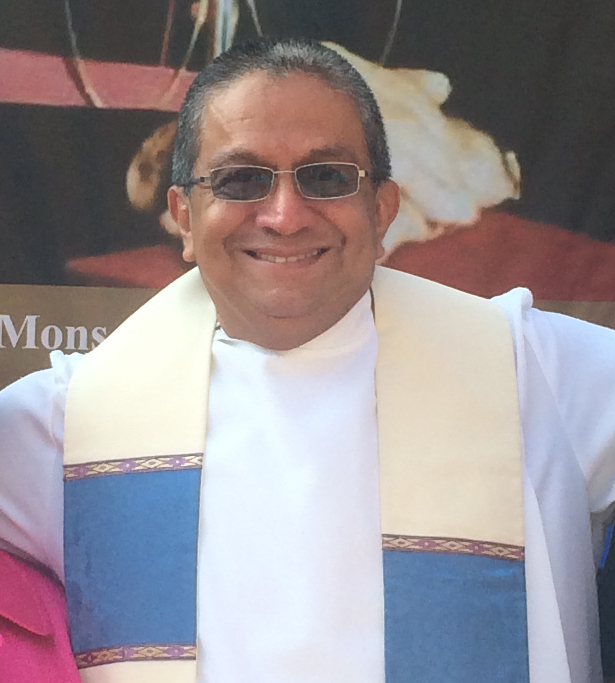 "I am a CISPES supporter because continuing to fight for social justice and a more people-centered country means continuing the dream and sacrifice of thousands of my fellow Salvadorans who died for that vision.” - Padre Carlos, New York City