Organizations Call for Mobilization on International Worker's Day
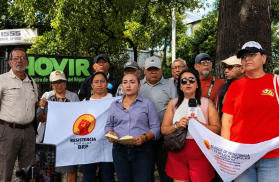
More than 50 organizations from the labor, healthcare, education, environmentalist, religious, and grassroots sectors are preparing to march this May 1st in El Salvador, following several weeks of activities aimed at mobilizing the participation of the Salvadoran people. As part of these calls to action, the Popular Rebellion Resistance and Bloc (BRP) has called for a march "for life, for dignity, and freedom"— denounce attacks on the environment as well as the displacement of rural communities, demanding respect for labor dignity, and calling for the release of victims unjustly detained due to political persecution and under the State of Exception.
“This May 1st, we call for the unity of all organizations, trade unions, communities, cooperatives, and other expressions of civil society. This is the moment to demonstrate maturity and conviction, and to confront this grave situation—standing as one—against a regime that persecutes, divides, and destroys society for its own benefit,” reads the statement from the BRP. The Movement for the Defense of the Working Class, the Faribundo Marti National Liberation Front (FMLN), and others have also called for Salvadorans to march this May 1.
In its statements, the BRP noted that “May 1, 2026, arrives at a very difficult moment for the working class—one characterized by rising unemployment; the soaring cost of food, fuel, and housing; wage freezes; and the deterioration of public services, particularly in healthcare and education sector, and water access.”
According to data cited by the organizations, the cost of living has risen by approximately 30%, with no corresponding wage increases to offset it. This has severely impacted the population's purchasing power and left hundreds of families in conditions of heightened vulnerability, pushing some 136,000 people into extreme poverty. Compounding this situation is the elimination of income sources for thousands of street vendors who have been evicted from public squares and markets, leaving them with no clear alternatives for their livelihood.
The organizations also warn that the pension system fails to guarantee a dignified old age; consequently, they are demanding a structural reform that includes a public pension system, the abolition of private pension funds (AFPs), and pension benefits sufficient to cover basic needs. Furthermore, the FMLN Veterans Collective of the Department of San Salvador denounced the government for failing to deliver on a promised pension increase for war veterans.
Regarding healthcare, they raise concerns about the deterioration of the public system, citing shortages of medicines, limitations on care, and mounting pressure on hospitals. This situation, they point out, shifts costs onto working-class families, who are compelled to pay for private services. “Today, more than ever, the Salvadoran people face concrete threats against fundamental rights won through decades of sacrifice. We march to demand an immediate end to the layoffs of healthcare workers (...) We march to clearly say ‘no’ to the privatization of healthcare in El Salvador,” stated Dr. Rafael Aguirre of the National Coordinating Committee for the Defense of the Salvadoran People’s Health (CONADESA).
Furthermore, they denounce the lack of guarantees for the exercise of labor rights—including obstacles hindering the legal recognition of at least 60 trade unions and a failure to respond to labor disputes—while simultaneously demanding an end to layoffs and the reinstatement of workers. This demand is particularly focused on the public sector, where more than 40,000 individuals have been dismissed during the Bukele administrations, many of them without receiving any severance pay.
These demands extend to the agricultural sector, which is calling for access to credit, subsidies, and supplies, as well as conditions that enable sustainable agricultural production. The march will also serve as a platform to demonstrate opposition to projects that negatively impact the environment, such as mining.
A group of priests belonging to the Monsignor Romero Committee also joined the call; they invited Catholic and Evangelical congregants to join the march and denounced what they described as a pattern of persecution and harassment against critical voices within the churches. This pattern ranges from smear campaigns on social media to direct threats and surveillance—particularly targeting those who speak out on issues such as the State of Exception or mining.
The Committee expressed its solidarity with "those pastors and ministers who have also faced threats for speaking out in defense of life and human rights," and urged others to support the demands of the march. "Praying alone is no longer enough; as Christians, it is also incumbent upon us to stand alongside the people who are being battered by this regime," stated Father David Rodríguez.
Both the Committee and the BRP organizations demand the release of political prisoners and the thousands of individuals unjustly detained under the state of exception. “In this country, they apply the state of exception to everything—to street vendors in the city center, to people whose land they want to seize... there are so many people suffering,” noted Samuel Ramírez of the Movement of Victims of the Regime (MOVIR).
Ramírez also announced that they would join the May 1st demonstrations to demand answers from state institutions regarding the victims of arbitrary arrests. “The streets are the only thing we have left at our disposal; the government institutions... now answer to the Presidential Palace; they no longer answer to the people,” he asserted.
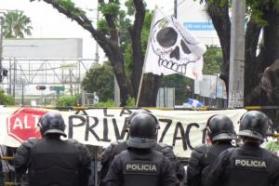
In the days leading up to the mobilization, the National Civil Police (PNC) announced a police and military deployment across various parts of the country, particularly at high-traffic bus stops. On previous occasions, this type of operation has been criticized as a tactic designed to intimidate and discourage participation among those traveling to San Salvador to join the march.
According to Sonia Urrutia of the BRP, “this day of popular and democratic mobilization brings together trade unions, peasant and agriculture organizations, urban and rural community groups, youth and university sectors, grassroots religious sectors—including historic churches—human rights organizations, the movement of innocent victims of the state of exception, national teachers' unions, primary and secondary school teachers, artists, professionals, and diverse expressions of the organized people.”
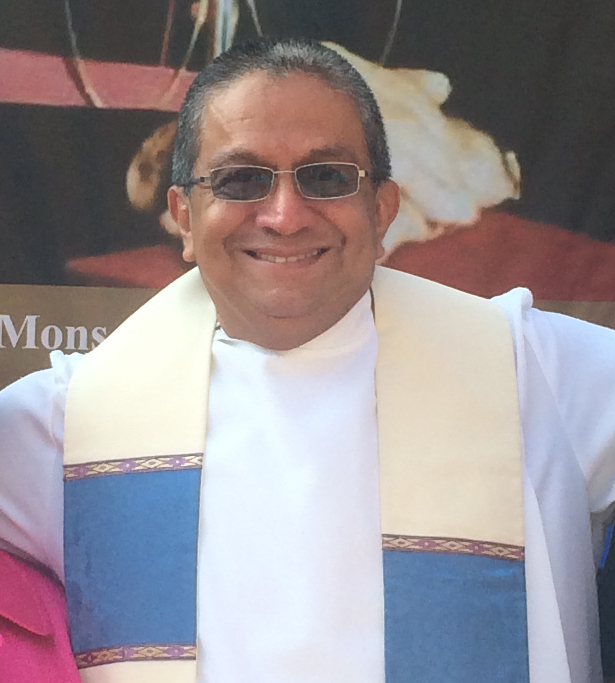 "I am a CISPES supporter because continuing to fight for social justice and a more people-centered country means continuing the dream and sacrifice of thousands of my fellow Salvadorans who died for that vision.” - Padre Carlos, New York City