Resistance in the streets: Salvadoran women raise their voices against repression
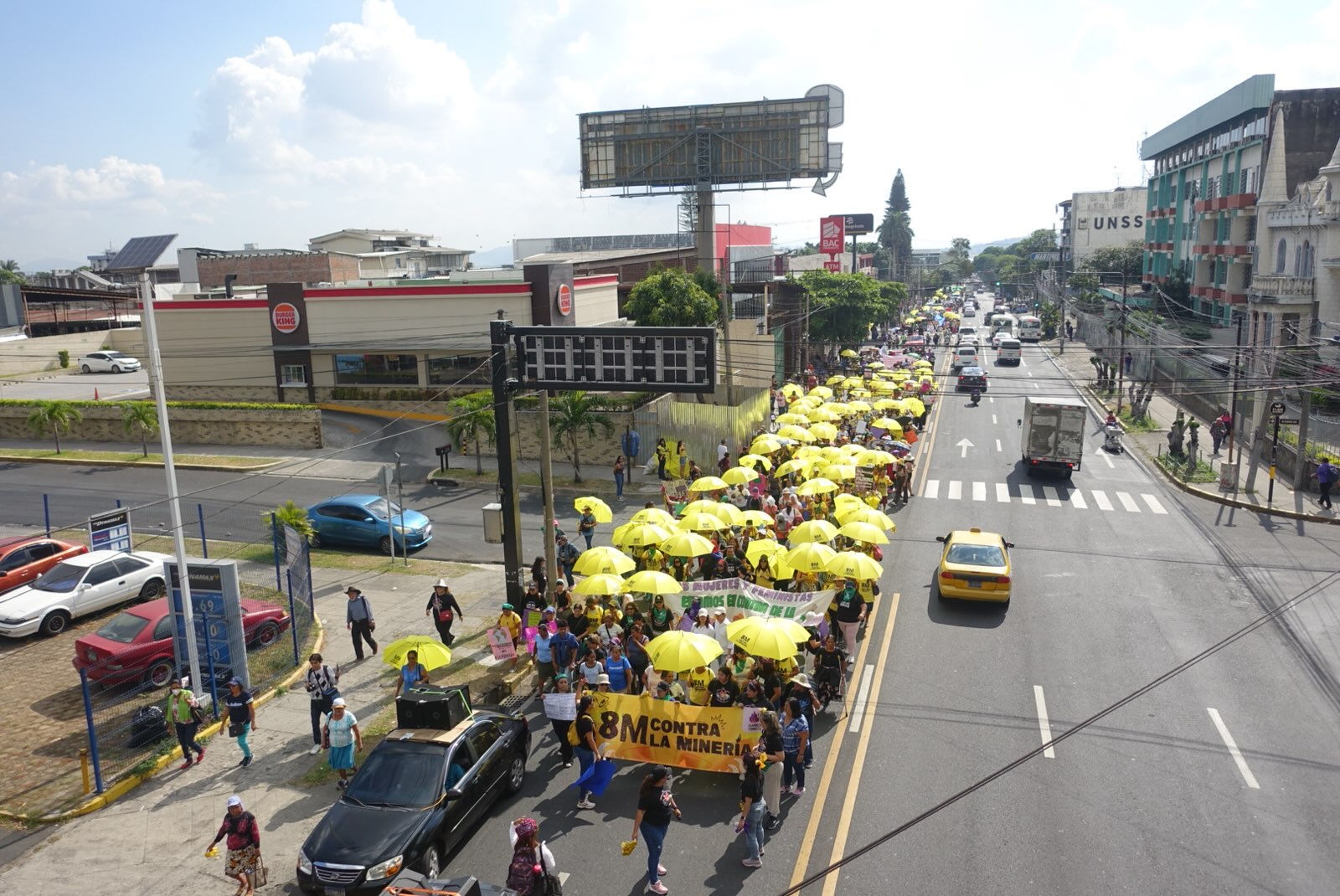
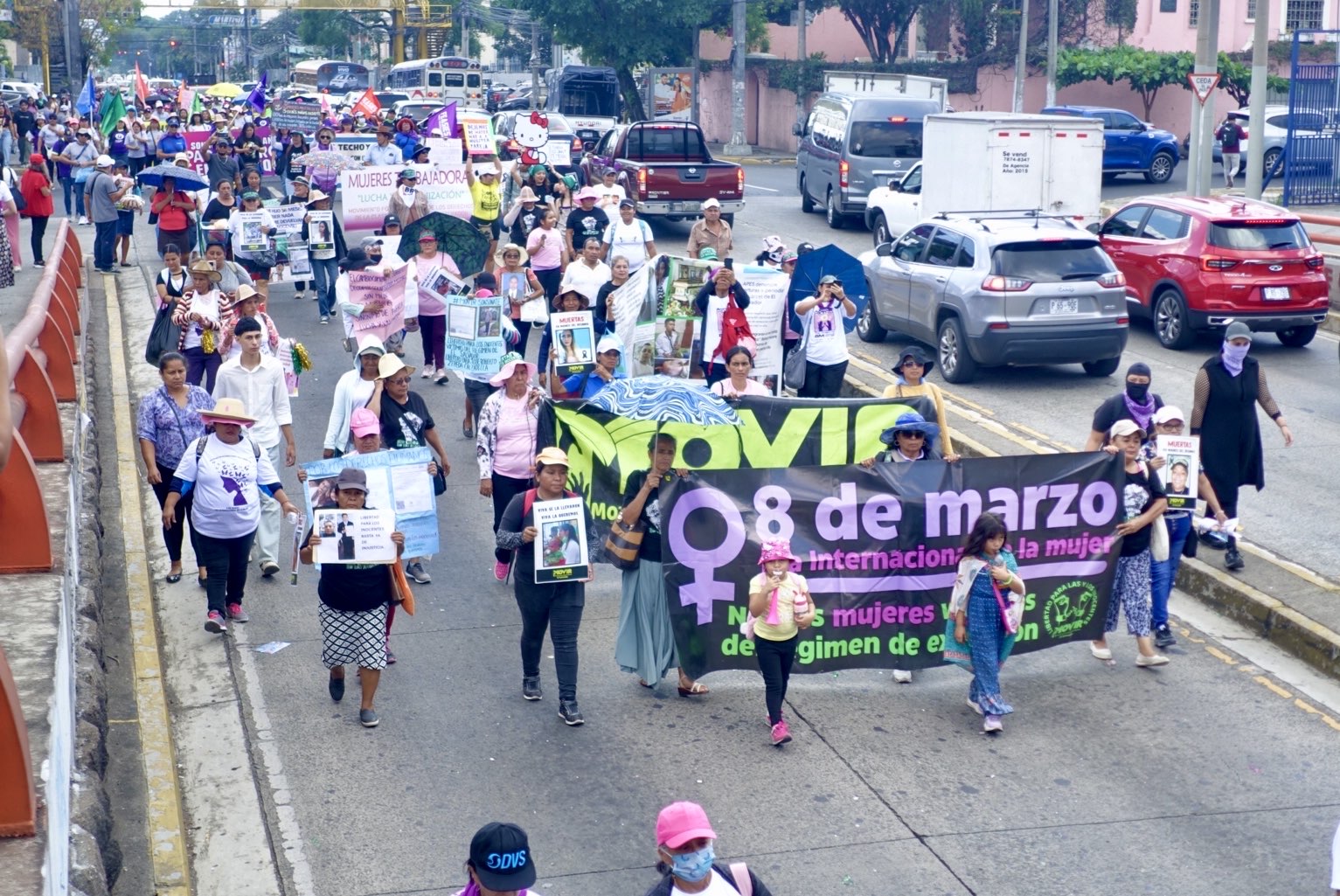
On March 8, International Women's Day, Salvadoran women took to the streets with a clear message: the feminist struggle continues, despite the attempts of Nayib Bukele's government to silence it with repression, fear, and criminalization.
In a climate of institutionalized violence under the State of Exception and serious rollbacks of their rights, thousands of women gathered at the Salvador del Mundo monument to speak out against gender violence, a lack of access to justice, job insecurity, and the exclusion of women from access to land and housing.
According to a statement issued by Feminist Network to Combat Violence against Women (RedFem), “militarization and the increase in arbitrary detentions have exposed many women to human rights violations, including forced separation from their families, institutional violence, a lack of access to justice, additional burdens of care and precariousness due to a decrease in income.” At least 25 women have lost their lives in state custody, according to data from Socorro Jurídico Humanitario (Humanitarian Legal Aid).
Representatives of feminist and women's organizations denounced that the repressive policies of the government, such as the State of Exception, have not only served to criminalize dissent, but also to weaken women's ability to organize.
The Women's Commission of the Movement for the Defense of Working Class Rights (MDCT) denounced the repression against union leaders, workplace harassment, and arbitrary terminations. They also pointed out that the criminalization of protest and the increase in workplace harassment in the public sector directly affect women workers and union leaders, who face an increasingly hostile environment for defending their rights.
Data from Equipo Maíz's Social Struggle and Resistance Monitoring Center indicates that 390 complaints were filed by feminist and women's organizations against state agencies in 2024, . The main complaints were related to violence against women, a lack of access to judicial redress, and non-compliance with laws protecting women, as well as persecution, repression, and attacks against human rights organizations and defenders.
Feminist organizations also reported that the government manipulates statistics, erasing femicides from official records in order to uphold its narrative of security. According to RedFem, 38 femicides were documented in 2024. According to data from the Attorney General's Office, there was a 15% increase in violence against women from 2023 to 2024, with a total of 20,950 incidents, including femicide and sexual, physical, psychological and economic violence.
The Women's Roundtable on Land and Property also denounced that the concentration of land in the hands of a few and the lack of public policies to guarantee women's access to property have deepened the poverty and marginalization of rural women, limiting their opportunities to ilve a dignified life.
The march also made its opposition to the reactivation of metals mining a central theme. “No to mining, yes to life” was one of the slogans that echoed throughout the rally at the Salvador del Mundo monument. Feminist organizations denounced the devastating effects of mining on the environment, public health and the lives of women, especially those living in rural areas.
Faced with a government that attacks their struggles and demands, Salvadoran women have responded with more organization and determination, convinced that resistance is the only way forward.
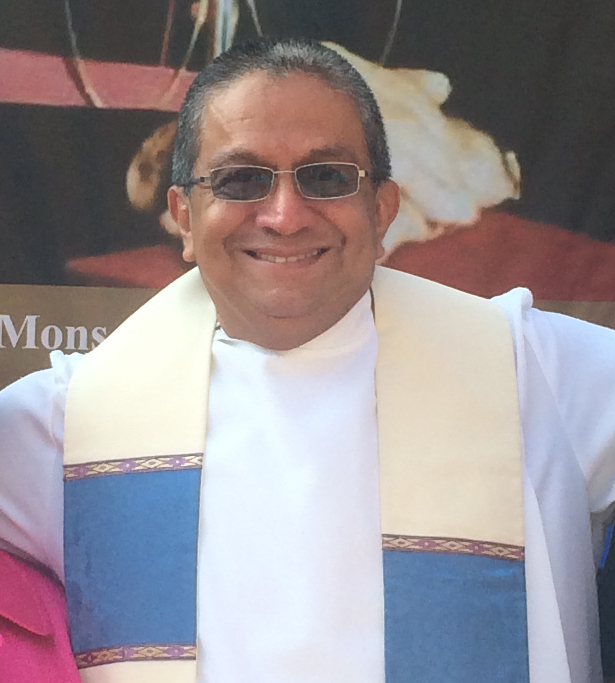 "I am a CISPES supporter because continuing to fight for social justice and a more people-centered country means continuing the dream and sacrifice of thousands of my fellow Salvadorans who died for that vision.” - Padre Carlos, New York City