Concerns loom about Obama
Over the past several years,economists, politicians and corporate tycoons have weighed in on the nationaldebate about economic collapse and recovery. Though few in the mainstreamdiscourse have scrutinized free trade as a contributing factor, the connectionshave been made by hundreds of thousands of unemployed U.S. workers, namely instates like Michigan, Ohio, Pennsylvania, Indiana and California, wheremanufacturing industry job loss has been highest. In February 2008, the SeattleTimes reported, “A September NBC/Wall Street Journal poll found 59 percent ofthe country believes existing trade policy ‘has been bad for the U.S.economy’.”
LauraCarlsen of the Center for International Policy wrote, “The economic crisis onlystrengthens demands [for a fair-trade model]. If international trade andinvestment policy is the pillar of the current economic model, its revisionmust be a foundation of global restructuring plans.”
HillaryClinton and Barack Obama tried to distance themselves from NAFTA on the 2008campaign trail, making explicit commitments to overhaul trade policy for thebenefit of U.S. workers; less was said about the millions of workers around theworld who have suffered economic exploitation as a result of the same policies.As candidate Obama said to the Wisconsin Fair Trade Campaign, “NAFTA’sshortcomings were evident when signed and now we must now amend the agreementto fix them. While NAFTA gave broad rights to investors, it paid only lipservice to the rights of labor and the importance of environmental protection.”
SincePresident Obama’s inauguration, it seems that the discussion of trade policy,let alone reform, had nearly disappeared. Soon after entering office, PresidentObama assured Prime Minister Harper of Canada and President Calderón of Mexicothat the renegotiation of NAFTA was off the table. On the positive side, the Obama administration and theCongress seemed relatively uninterested in passing left-over FTAs with SouthKorea, Panama and Colombia that had been negotiated by the Bush administration.
Perhapsthe proposition of passing another NAFTA-style agreement during the country’smost severe economic crisis since the Great Depression was just too much of aslap in the face.
Thus,the recent decision by U.S. Trade Representative Ron Kirk, to move forward onBush’s 2007 U.S.-South Korea Free Trade Agreement took the trade justicemovement by surprise. According to Citizen’s Trade Campaign, “Since Bush firstpushed it, not one U.S. labor union, faith group, family farm organization orpro-environmental entity has yet to endorse or support the Korea FTA, oradvocate for its passage.”
TheCitizen’s Trade Campaign is spearheading a national effort to press for a realrenegotiation of the agreement, including high labor, environmental and humanrights standards. This promises to be a hard fight; U.S. Trade RepresentativeRon Kirk has stated that re-negotiation will focus primarily on U.S. concernsover beef and auto import quotas, sidelining other concerns in order toexpedite the process. President Obama will visit Korea in November, when heplans to sign a “renegotiated” deal, which would then move to Congress for avote.
Behindthe scenes, President Obama is also in the midst of negotiating a majormultilateral agreement called the Trans-Pacific Partnership, which wouldsupersede existing trade agreements between the U.S. and Peru, Australia,Chile, and Singapore and also include Brunei, Vietnam and New Zealand. TheTeamsters have vowed to support the TPP only if it includes core laborstandards as defined by the International Labor Organization (ILO), the elimination of foreign investorprotections (such as those currently permitting Pacific Rim Mining to sue ElSalvador), and strong environmental and food safely protections, among otherrequirements. However, the President’s willingness to move forward on the Koreaagreement without guaranteeing such fundamental changes raises major questionsas to whether the TPP will break significantly with the NAFTA model that Obamacriticized as a candidate.
Theclear eagerness by the USTR to continue forward on the same path paved byClinton and Bush, rather than to enact the overhaul promised on the campaigntrail, should fire up the global justice movement. There are three different,yet complementary, strategies that CISPES and other fair trade advocates expectto pursue in the coming year:
1) Fight to block the Korea, Panamaand Colombia FTAs from coming up for a vote. The passage of these treaties waslargely blocked in the previous Congress thanks to some in the Democraticleadership responding to the demands of fair trade organizations and laborunions.
2) Continue to fight to pass theTrade Reform Accountability and Development (TRADE) Act, which already has thesupport of the majority of Democrats. The bill would require the President torenegotiate existing trade agreements, including NAFTA and CAFTA, to meet a newset of labor, environmental and human rights standards, and would require anyfuture trade agreement to include the same language.
3) Build more support for a billthat would require the U.S. to withdraw from NAFTA. A small group ofRepresentatives, ranging from leaders of the progressive caucus to a fewarch-right Republicans, introduced such a bill earlier this year. Socialmovements throughout the Americas demand that their governments get out of thisagreement, which has displaced so many millions from their factories and farms.
El Salvador is facing two lawsuitsfiled by foreign corporations for alleged violations of CAFTA’s investor rightsprovisions. There is tremendous urgency to repeal or renegotiate CAFTA, notonly to stop future lawsuits but for the 500-700 Salvadorans who leave homeevery day in search of economic opportunities in the U.S. As the border getsincreasingly militarized, the path northward grows increasingly deadly forthese economic refugees. The FMLN government is already implementing socialprograms to lower the cost of living and work opportunities that will allowmore Salvadorans to remain in their country, but CAFTA will continue toconstrain them until we join forces and take action to roll it back.
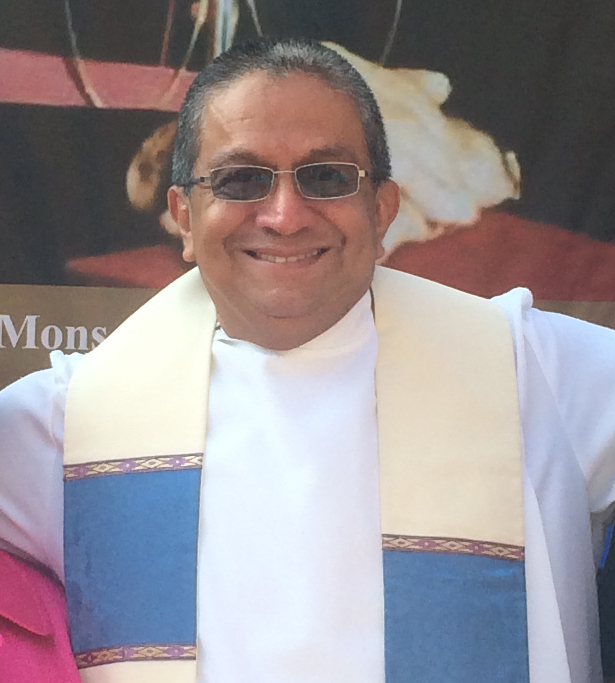 "I am a CISPES supporter because continuing to fight for social justice and a more people-centered country means continuing the dream and sacrifice of thousands of my fellow Salvadorans who died for that vision.” - Padre Carlos, New York City