VANCOUVER - Pacific Rim Mining held its annual general meeting in
downtown Vancouver today - attended by a few directors and more than a
dozen protesters.
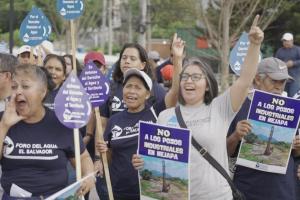
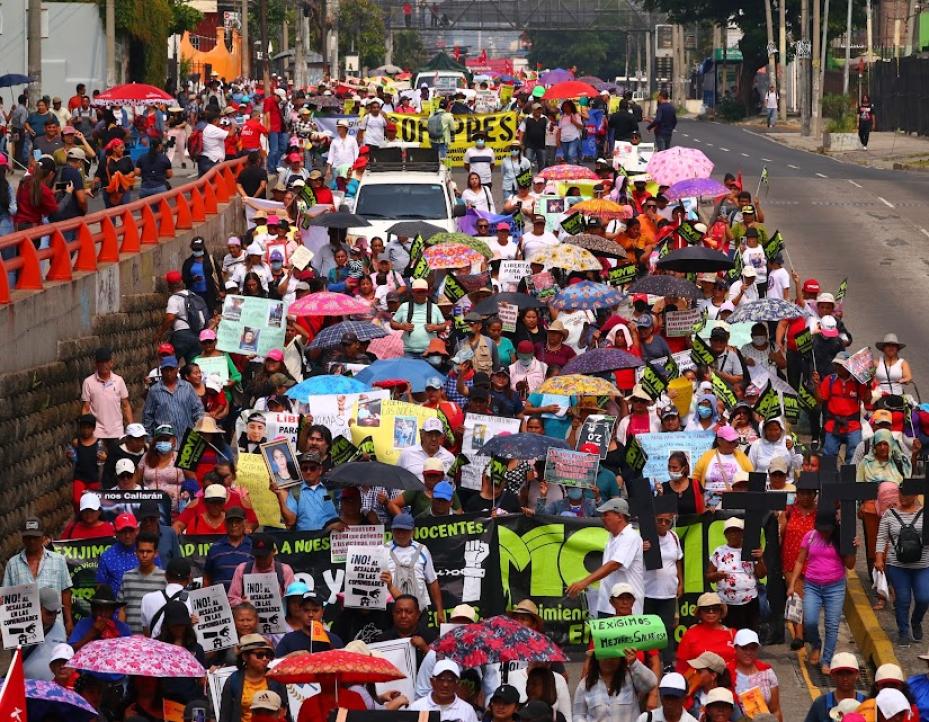
Most of the demonstrators were from the Committee in Solidarity with
the People of El Salvador (CISPES) in the US Pacific Northwest. They
wore tags describing themselves as shareholders in democracy, human
rights, access to clean water and "our future."
Vancouver-based Pacific Rim Mining is suing the people of El
Salvador after the government refused to allow it to mine using methods
that would poison El Salvador's rivers. The suit for millions in "lost
profits" has been filed under the Central American Free Trade
Agreement. CISPES is calling on the company's directors to drop the
suit.
Two CISPES representatives were allowed into the meeting, then ejected after they tried to speak.
Fundraising Collective Member - hourly (10 hrs/week) Application Due: September 10th, 2010
Location: Washington, DC
Start Date: Immediately
Fundraising Collective Members will be part of the national fundraising team. FunK members are responsible for ensuring funds for the national organization as one of our primary grassroots fundraising programs. The main role of this position is to make calls to our grassroots phone list, update supporters on our campaign, and pitch them to increase their financial and political support of CISPES.
Comunicado de CISPES sobre nueva Embajadora de los EEUU
Wednesday, 01 de September de 2010
El 19 de agosto el Presidente Obama nombró a María del Carmen Aponte como
la nueva embajadora para El Salvador. Obama anunció la designación de la nueva
funcionaria durante el receso (las vacaciones) del Senado, superando un bloqueo
de su nombramiento encabezado por unos senadores republicanos incluyendo Jim
DeMint de Carolina del Sur.La
nueva embajadora desempeñará el cargo hasta enero de 2012, cuando tendría que
ser nombrada otra vez y aprobada por el Senado.
Aponte es una abogada de descendencia puertorriqueña y antigua directora
(2001-2004) de la Administración de Asuntos Federales de Puerto Rico en
Washington, DC. También ha sido parte de las juntas directivas del Concejo
Nacional de La Raza (NCLR), el Fondo Puertorriqueño para la Defensa Legal y la
Educación (PRLDEF) y la Universidad del Distrito de Columbia.
En julio del año pasado, después de consultar con nuestros aliados en El
Salvador y con organizaciones de salvadoreños en los EEUU, CISPES propuso un
criterio para el nuevo embajador o la nueva embajadora en El Salvador.
Considerando que: “dado la importancia inmensa de la población salvadoreña en
los EEUU, el nuevo embajador o la nueva embajadora debe estar dispuesta a
trabajar en favor de los derechos de inmigrantes…”
Es emocionante que por fin el gobierno estadounidense ha nombrado a una
mujer bilingüe como la nueva embajadora para El Salvador, especialmente alguien
como Aponte, quien por medio de su trabajo con el NCLR y otras organizaciones
ha abogado por los derechos de latinas y latinos. El Salvador está viviendo una
crisis económica y social muy grave debida, en parte, al ataque contra
inmigrantes en los EEUU, y una embajadora comprometida con los derechos humanos
y civiles de las y los inmigrantes y sus familias, es un cambio agradable y
necesario.
Alerta: ¡Los accionistas de la Pacific Rim se reúnen hoy!
Wednesday, 25 de August de 2010
Mandamos un mensaje claro y unido: ¡Retiren
su demanda deshonroso
contra el gobierno de El Salvador!
Hoy, los accionistas y la
Junta Directiva de la empresa minera Pacific Rim se reúnen en su Asamblea
General Anual en Vancouver, Canadá. Cuando
el gobierno y el pueblo de El Salvador detuvo la explotación del oro en
Cabañas, El Salvador, esta empresa canadiense abrió una oficina en el estado de
Nevada para poder interponer una demanda contra del gobierno de El Salvador
bajo las reglas del Tratado de Libre Comercio (TLC) entre Centroamérica y los
Estados Unidos por cientos de millones de dólares de sus supuestas
‘ganancias perdidas’.
La empresa todavía está asegurando a sus
accionistas que espera “una resolución” con el gobierno
salvadoreño. Pero, después de las elecciones
de 2009, El Salvador finalmente tiene un gobierno democrático que sí responde a
las demandas del pueblo. El sábado pasado, el presidente de El
Salvador, Mauricio Funes, reiteró otra vez su compromiso público: “No voy a autorizar ningún proyecto de
exploración ni explotación minera” y acogió favorablemente a
un proceso legislativo para aprobar una ley nacional que prohíbe la minería
metálica.
Update: Students Demand Justice on 35th Anniversary of Massacre
Monday, 09 de August de 2010
Also included in this update:
* FMLN and Ministry of Health Push for Affordable Medicines
* El Salvador and Cuba Increase Cooperation
On Friday, July 30, hundreds students from the University of El
Salvador took to the streets, accompanied by professors, staff and
other sectors of the social movement. The march, filled with street
theater, papier-mâché tanks and a 9-foot gorilla, was a commemoration
of the university student massacre that occurred on July 30, 1975.
Thirty-five years ago, university students took to the streets to protest
military incursions on the Santa Ana campus and the repressive policies
of the military dictatorship in power at the time. The peaceful march
was attacked by Salvadoran army soldiers with gunfire and tanks,
perpetrating the attack with other repressive State security forces.
While there are no official numbers of how many students were killed
and wounded in the massacre, it is estimated at least 30 students died
and over a hundred more were wounded.
This year, student organizations including the Roque Dalton University
Front (FURD), the Revolutionary Student Brigades (BRES) and a number of
other groups organized the march and all-night vigil that followed.
This year, marchers and organizers demanded trials to bring justice to
the victims of the 1975 massacre and a repeal of the country's Amnesty
Law - passed just after the end of El Salvador's Civil War in 1993 and
considered by many Salvadorans to be the biggest obstacle to respect
for human rights in the country.
World Bank tribunal gives green light to Canadian mining company’s lawsuit against government of El Salvador
WASHINGTON, D.C. – A World Bank tribunal’s decision on Monday to move
forward with a Canadian gold mining company’s controversial lawsuit
against the government of El Salvador highlights a central failure of
U.S. trade pacts to respect the national sovereignty of member
countries.
In 2009, Pacific Rim Mining filed the lawsuit under the rules of the
U.S.-Central America Free Trade Agreement (CAFTA), demanding “hundreds
of millions” of dollars from the Salvadoran government, which rejected
the Vancouver, B.C.-based company application for exploitation permits.
El Salvador’s Ministry of the Environment and Natural Resources argues
that Pacific Rim never completed the necessary process to obtain an
exploitation permit, and local communities have demonstrated widespread
opposition to the proposed El Dorado gold mine based on the
environmental and public health risks of cyanide-leach mining.
Update: Suspects Arrested for Assassinations, Coalition Reasserts Mining Motive
Thursday, 15 de July de 2010
Also included in this update:
* Cabañas Community and CISPES Delegation Honor Marcelo Rivera
* Right Wing Parties Continue to Scramble and Divide
* Domestic Workers Granted Health Care Coverage
* Sixteen Killed in Bus Burning, FMLN Suspects Destabilization Plan
* Social Movement, FMLN and Funes Denounce Honduran Coup Leader's Visit
In a July 13 statement after the arrest of 8 suspects in connection to
the murders of anti-mining activists from the rural department of
Cabañas, El Salvador, the National Roundtable Against Metallic Mining
(the Mesa) criticized the investigation for ignoring glaring ties to
gold mining interests in the region. On July 1, the National Civil
Police (PNC) and the Attorney General's Special Organized Crime Unit
(DECO) announced the arrests of 8 individuals for the murders of Dora
Alicia Sorto Recinos and her unborn child, Ramiro Rivera and Felicita
Echeverría in December of last year. Rodolfo Delgado, the director of
the DECO, announced that the murders were due to a family feud and that
two families had contracted gang members to kill members of the rival
families. He went on to say that the mining conflict was not the
principal motive for the murders and that the Attorney General was
satisfied that all the material authors and the two intellectual
authors of the crime were in custody.
In 2005, then-Senator Barack Obama published an opinion piece in the Chicago Tribune
entitled “Why I oppose CAFTA.” In his article, released on the same
date as the Senate vote on the Dominican Republic-Central American Free
Trade Agreement (“DR-CAFTA”), Obama explained that he would not vote
for the bill and voiced his opinion that DR-CAFTA “…does little to
address enforcement of basic environmental standards in the Central
American countries and the Dominican Republic.”1
Despite well-founded fears about the consequences of DR-CAFTA among its
critics, President George W. Bush and his administration lobbied
heavily for the passage of the bill, which was signed into law on
August 2, 2005. El Salvador became the first of the Central American
nations to implement DR-CAFTA after the treaty took effect in the
country on March 1, 2006.
Job Posting: El Salvador solidarity org in Seattle hiring community organizer
Tuesday, 03 de August de 2010
español sigue
**please distribute**
GRASSROOTS COMMUNITY ORGANIZING POSITION with El Salvador solidarity organization in Seattle, WA
Organization: Seattle CISPES – Committee in Solidarity with the People of El Salvador
Position: Committee Coordinator – bilingual English/Spanish (see details in position description)
Location: Seattle, WA
Application deadline: August 30, 2010
Contact: Eddie Salazar –
Esta dirección de correo electrónico está protegida contra los robots de spam, necesitas tener Javascript activado para poder verla
, 206.329.3543
Seattle CISPES – Committee in Solidarity with the People of El Salvador
– is hiring for a 1/2 time community organizing position. Applications
are due August 30, 2010. The position begins October 1.
Comunicado: Jóvenes salvadoreños residentes en EE.UU visitan país de origen para mostrar solidaridad
Friday, 02 de July de 2010
Comunicado de Prensa - 1 de julio, 2010
CONTACTO: Lisa Fuller, (202) 521-2510 ext. 204
Jóvenes salvadoreños residentes en los EE.UU. visitan su país de origen para mostrar solidaridad con comunidades bajo la amenaza de explotación minera metálica
Exigen al Fiscal General que investigue los asesinatos de tres líderes comunitarios
SAN SALVADOR, EL SALVADOR – El 25 de junio, una delegación de 10
jóvenes salvadoreñas y salvadoreños viviendo en el exterior – de las
ciudades de Nueva York, Los Angeles, Santa Cruz, San Francisco,
Washington, DC, y Vancouver, B.C. – visitaron la oficina del Fiscal
General de la República para exigir una investigación profunda sobre
los asesinatos de 3 activistas anti-minería en el Departamento de
Cabañas, El Salvador los cuales han sucedido desde junio del año
pasado.
Special Update: One year since the coup in Honduras
Monday, 28 de June de 2010
June 28th marks the one year anniversary of the military coup in
Honduras, as well as the consolidation of a powerful and vibrant
opposition to the resulting administrations. CISPES stands in
solidarity with the people of Honduras and the Frente Nacional de
Resistencia Popular (FNRP) in continuing to demand a true and
participatory democracy, economic justice and an immediate end to the
horrendous repression and human rights violations that have surged
since the coup. We remember all those whose lives have been taken for
resisting the illegitimate governments of Roberto Micheletti and Pepe
Lobo and for fighting for a better life for the Honduran people.
Commemorating the anniversary, the FNRP declared that “Honduras today
is the scene of a battle between the old and the new; between
domination and liberty. Here the criminal armies of international
fascism, right-wing parties, churches at the service of the oligarchs
and governments that serve the empire are confronted by grassroots
popular organizations, progressive and democratic political forces,
historically-oppressed social sectors and the impartial solidarity of
brother and sister counties.”