take Action get Involved Donate
Stand in Solidarity with the People of Honduras - LASC alert and demands PDF Print E-mail
Tuesday, 30 June 2009

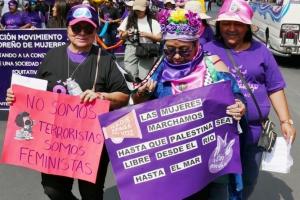
Military Coup in Honduras - Stand in Solidarity with the People of Hondurasprotest_honduras.jpg

The Latin America Solidarity Coalition (LASC) condemns the military coup against the democratically elected Honduran President Zelaya. The Honduran social movements, who are courageously resisting the military take-over through protests, occupations and strikes, are calling on the international community to speak up in defense of real and direct democracy, for life, justice, liberty, dignity and peace.

Call the State Department and the White House and ask for actions, not merely words, including:

1. A cut off of all US aid (as required by US law) until Zelaya is safely returned to office.
2. Financial sanctions against the coup plotters
3. An investigation into what signals U.S. Ambassador to Honduras Hugo Llorens gave to coup plotters before the coup.

State Department: 202-647-4000 or 1-800-877-8339
White House: Comments: 202-456-1111
Click here to send a message to President Barack Obama

Background: A military coup took place in Honduras on Sunday, June 28, led by SOA graduate Romeo Vasquez. In the early hours of the day, members of the Honduran military surrounded the presidential palace and forced the democratically elected president, Manuel Zelaya, into custody. He was immediately flown to Costa Rica.

A national referenfum had been scheduled to take place on Sunday in Honduras to consult the electorate on a proposal of holding a Constitutional Assembly in November. General Vasquez had refused to comply with this vote and was deposed by the president, only to later be reinstated by the Congress and Supreme Court.

The Honduran state television was taken off the air. The electricity supply to the capital Tegucigalpa, as well telephone and cellphone lines were cut. Government institutions were taken over by the military. While the traditional political parties, Catholic church and military have not issued any statements, the people of Honduras are going into the streets, in spite of the fact that the streets are militarized. From Costa Rica, President Zelaya has called for a non-violent response from the people of Honduras, and for international solidarity for the Honduran democracy.

 from http://www.lasolidarity.org/

More background information and articles:

Obama Has the Power and Responsibility to Help Restore Democracy in Honduras

Resistance and Repression in Honduras

Honduras: Old Coup Strategy, Different Stage

Coups and Constitutions: From Bolivia to Honduras  


UPDATE ON THE SITUATION IN HONDURAS (from the SHARE Foundation)


Roberto Micheletti Bain, a son of immigrants from Lombardy, Italy, was sworn as president of Honduras by the National Congress on Sunday, June 28, after the coup in which the democratically elected president, Manuel "Mel" Zelaya, was ousted by military officials. Micheletti's appointment was justified by a supposed resignation letter by Zelaya; howewer, Zelaya denied having signed such a letter.  His cabinet, in a statement made public on Monday, June 29, expressed that they are joining the peaceful resistance that will not recognize the new government of Micheletti.


Zelaya announced that he will return to Honduras on Thursday, July 2, accompanied by the Organization of American States (OAS) Secretary General, José Insulza.  "I will complete my four-year term whether you, leaders of the coup d'etat, like it or not." pronounced Zelaya.  However Micheletti announced that he will remain in power no matter how intense the international pressure gets. The Honduran Attorney General has threatened to imprison Zelaya under corruption charges if he returns to Honduras.  In the meantime over 25,000 Hondurans have taken to the streets to demonstrate against the military coup d'etat. The protesters faced a violent onslaught of tear gas, rubber bullets, tanks firing water mixed with chemicals, and clubs as the military tries to maintain control over the fragile country. Click here to watch a video on the riots following the coup.


Latin American Governments Isolate Honduras Politically and Economically


The Head of States of many Latin American countries convened in Nicaragua on Monday, June 30, to conduct emergency meetings regarding the Honduran crisis. The countries members of  Bolivarian Alliance (ALBA), the Central America Integration System (SICA), and the Rio Group unanimously condemned the coup and extended their support to President Zelaya.  The Organization of American States (OAS) Secretary General, José Insulza, as well as President Zelaya, and Honduran Chancellor, Patricia Rodas were present at the meetings.


SICA members, whose attendees included Salvadoran President Mauricio Funes, Guatemalan President Alvaro Colón, Costa Rican President Oscar Arias, decided to remove their ambassadors to Hondurans and to leave their embassies with a few staff.  SICA members also halted commerce along the border with Honduras for 48 hours.  Moreover the Central American Bank for Economic Integration issue a statement announcing the suspension of credit to Hondurans until Zelaya in reinstated to power. The ALBA countries also decided to withdraw their ambassadors but to continue their international cooperation programs with Hondurans.  Mexico and Brazil have also joined the list of countries that have pulled out their ambassadors from Honduras

Before traveling to Nicaragua, Salvadoran President Mauricio Funes held a private meeting with OEA's Secretary José Insulza to analyze the situation in Honduras.  Funes announced his support for and recognition of Manuel Zelaya as the democratically-elected president of Honduras and reiterated his support while attending the summit in NicaraguaEl Salvador has joined the sanctions imposed on Honduras by SICA members.


In a press conference on Sunday, FMLN party leaders condemned the coup d'etat in Honduras.  ARENA on the other hand, avoided calling the situation in Honduras a coup d'etat and condemned what they called the "disruption of the constitutional order."  Donato Vaquerano, chief of the ARENA legislators, urged President Funes to avoid committing Zelaya's mistakes.  "The president of El Salvador should see himself 'Mel' Zelaya's mirror: the leaders should not be authoritarian and should respect the constitutional order or the Republic" Vaquerano stated threateningly. Many Salvadorans fear that the coup in Honduras, if it remains unresolved, will set a very dangerous precedent for El Salvador, since Mauricio Funes is the first leftist president and the FMLN does not hold the majority in the Salvadoran Congress.


 US Government's Response to the Coup


After outraged citizens organized demonstrations across the country against the Honduran coup, on Monday President Obama stated, "We are very clear about the fact that President Zelaya is the democratically-elected president."  He then alluded to the US Government's history of supporting undemocratic military action and political regimes in Latin America, "It would be a terrible precedent if we start moving backwards into the era in which we are seeing military coups as a means of political transition rather than democratic elections… we don't want to go back to a dark past."


Meanwhile, Secretary of State Hillary Clinton stopped short of calling the crisis in Honduras a coup.  When asked what demands the US Government is planning to make of the coup leaders, she responded, "We haven't laid out any demands that we are insisting on because we are working with others on behalf of our ultimate objectives."  John Negroponte, a former State Department official, commented on Secretary Clinton's remarks, "I think she wants to preserve some leverage to try and get Zelaya to back down from his insistence on a referendum," indicating that the State Department may not want Zelaya unconditionally reinstated as president of Honduras.

International Institutions Condemn the Coup

On Tuesday, June 30, the United Nations General Assembly adopted a resolution that asks all 192 member states not to recognize any Honduran government but Zelaya's.  The resolution also demanded the immediate return of Zelaya to the presidency.  Thirty countries co-sponsored the resolution, including the United States. Zelaya addressed the UN on Tuesday and received a standing ovation as he approached the podium.  To see coverage of Zelaya's speech at the UN, click here.

On Sunday, June 28, the Permanent Council of the Organization of American States (OAS) adopted a resolution condemning the coup d'etat in Honduras and demanding the "immediate and unconditional return of [President Zelaya] to his constitutional duties."  OAS Secretary General José Miguel Insulza traveled to Nicaragua over the weekend to attend the summit of the heads of state of SICA "with the goal of carrying out all necessary consultations."  The OAS also called for a special meeting of the Permanent Council on Wednesday July 1, in Washington, DC, which Zelaya will attend.  Several demonstrations in support of Zelaya are being scheduled for Wednesday in Washington, D.C.

Other international institutions have taken action to criticize the coup in Honduras.  The president of the World Bank, Robert Zoellick, announced that the bank has "put a pause" on its projects and lending in Honduras.  In addition, the president of the Inter-American Development Bank (IDB), Luis Alberto Moreno, announced that lending to Honduras will freeze until the situation in the country is resolved.

Coup leaders' Links to the School of the Americas

The international community remains concerned about the growing reports of human rights violations in Honduras.  Several of the masterminds behind the coup in Honduras are graduates of the infamous School of the Americas (SOA), now known as the Western Hemisphere Institute for Security Cooperation (WHINSEC).  The SOA/WHINSEC is financed by the Pentagon and has trained some of the most notorious perpetrators of human rights violations in Latin America.  General Romeo Vásquez, a senior military officer and leader of the coup, attended SOA/WHINSEC in 1976 and 1984.  General Luis Javier Prince Suazo, Air Force Commander and coup leader, attended the SOA in 1996.  General Vásquez was dismissed by Zelaya before the coup and General Suazo resigned as a result.


< Prev   Next >