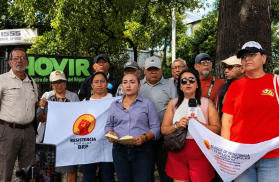
Organizations Call for March Against Electoral Control and the Continuation of the State of Exception
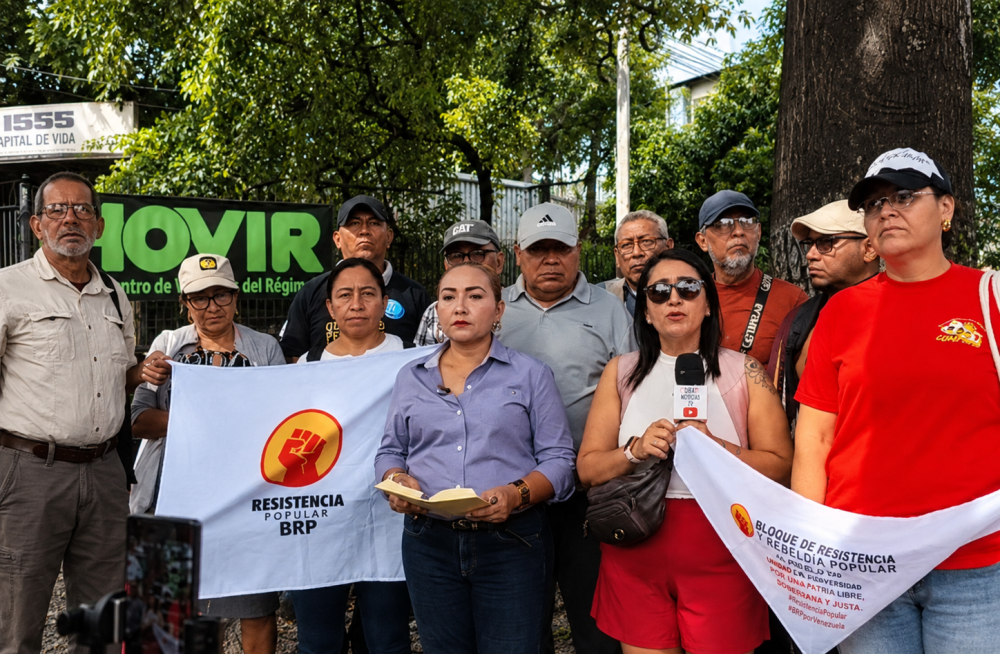
Salvadoran social and popular movement organizations have called for a mobilization on September 15, a date that, according to the Popular Rebellion and Resistance Bloc (BRP), has become a symbol of the struggle for true independence [...] “in the face of the establishment and deepening of an autocratic regime that has taken control of public institutions and placed them at the service of the family clan to which it belongs, the oligarchy, imperialism, and its own allies.” The organizations will once again take to the streets to denounce reforms to the political and electoral system, the extension of the State of Exception, human rights violations, and the deterioration of the population’s living conditions. The call also points to growing persecution against trade unionists and other organized sectors.
During the announcement of the march, the BRP warned that the electoral and constitutional reforms approved between 2025 and 2026 seek to ensure the continuation of the current government through 2033 and restrict the opposition’s opportunities for participation. The group maintained that “the context is completely controlled by the ruling party” and denounced “a manipulation of electoral laws and the Salvadoran Constitution,” arguing that participating in the process “ultimately legitimizes a process that is completely controlled by the government.”
The call also denounces the serious human rights violations committed during more than four years of the State of Exception, “which continues to affect thousands of families who mourn the abduction of their loved ones despite their not belonging to a criminal group.” According to the BRP, the measure is no longer temporary and “has practically become a public policy that restricts the rights of the entire population,” resulting in thousands of arbitrary arrests and the denial of families’ right to receive information about the living conditions and health of detained persons, including at least 19 union leaders and workers.
In this regard, Samuel Ramírez of the Movement of Victims of the Regime (MOVIR) said that some people have been waiting up to five years for a resolution in their cases and that, during the march, they will demand “a fair and transparent judicial process” for victims of arbitrary detention.
Under the slogan, “There is no independence under the State of Exception: for justice, freedom, and human rights!” MOVIR has called on people to join the march, stating that independence “cannot be reduced to a celebration while thousands of families continue waiting for justice and answers.”
The BRP stated that the criminal justice tools used in this context have also targeted “social leaders or political figures.” One such case is that of members of the National Alliance El Salvador in Peace, including nine Civil War veterans and one communications worker, who have spent more than two years in pretrial detention. Their hearing, scheduled for August, was suspended twice, and no new date has been set.
The call also denounces “the constant persecution of trade unionists and union executive boards,” to whom the government has still not granted the credentials necessary to represent the working class before employers and institutions.
One of the cases highlighted by labor organizations is that of Geovanni Antonio Aguirre López, a union member detained under the State of Exception since 2022 who will face a mass trial despite having two court orders for his release. The ILO Committee of Experts has also requested information from the Salvadoran state regarding his situation and guarantees for respect for freedom of association.
The BRP warned that mass trials violate the presumption of innocence and may place innocent people “in the same hearing with people who have in fact been proven to belong to criminal groups.”
These concerns are compounded by complaints from workers’ organizations about unjustified dismissals, harassment of union leaders, and obstacles to workers’ organization and representation. Among the cases denounced is the government’s refusal to recognize and register the leadership board of the National Union for the Defense of the Working Class (UNT).
Recently, the government of Nayib Bukele celebrated the fact that El Salvador was not included on the ILO’s 2026 “shortlist,” which includes countries questioned over possible labor rights violations. However, the ILO Committee on Freedom of Association continues to have an open case on El Salvador concerning allegations of anti-union dismissals and suspensions, interference, and restrictions on the exercise of trade union representation.
The Permanent Roundtable for Labor Justice (Mesa Permanente por la Justicia Laboral) criticized the government proposal to concentrate the work week into four eleven-hour days, arguing that it does not reduce working time but instead extends daily shifts and may affect health, rest, and family life. In response, it has called for reducing working hours without reducing wages and for strengthening job stability and freedom of association.
The Salvadoran Student Force (Fuerza Estudiantil Salvadoreña FES) also announced that it will participate in the march and, in a statement, denounced the deterioration of public education and the lack of conditions to guarantee access to and continued enrollment in higher education. Ahead of the September 15 march, the organization called for greater investment in public education and guarantees for young people’s right to organize, express themselves, and participate.
Salvadoran professionals, for their part, stated that they reject presenting job losses and the weakening of public services as “modernization,” and called for mobilization for “decent jobs, fair wages, and dignified pensions.”
From the agricultural sector, producers have also denounced the government’s abandonment of the sector, which has been severely affected this year by drought, deepening uncertainty as farmers face the risk of losing their seed stock.
These complaints are compounded by the deterioration of economic conditions, marked by rising costs for “education services, electricity, basic food items, fuel and transportation, health care, and housing rent,” as well as the “accelerated deterioration in the population’s quality of life.”
This deterioration has been accompanied by an increase in poverty. According to World Bank data, between 2019 and 2023, the proportion of Salvadoran households living below the national poverty line rose from 22.8% to 27.2%, while extreme poverty increased from 4.3% to 8.8%.
Likewise, the evaluation of the government’s seventh year conducted by the University Institute of Public Opinion (IUDOP) at the José Simeón Cañas Central American University reported that 71 out of every 100 people expressed economic concerns. The Institute indicated that 15.3% of the population identifies the high cost of living and inflation as the country’s main problem, 12.4% points to unemployment, and 5.7% to poverty.
In response, BRP representatives called for strengthening popular organization “in neighborhoods, communities, cantons, hamlets, factories, stores, workplaces, and everywhere people can organize,” and called on people to take to the streets this September 15 to denounce the human rights violations committed under the State of Exception, persecution against organized sectors, and the deterioration of the working population’s living conditions.
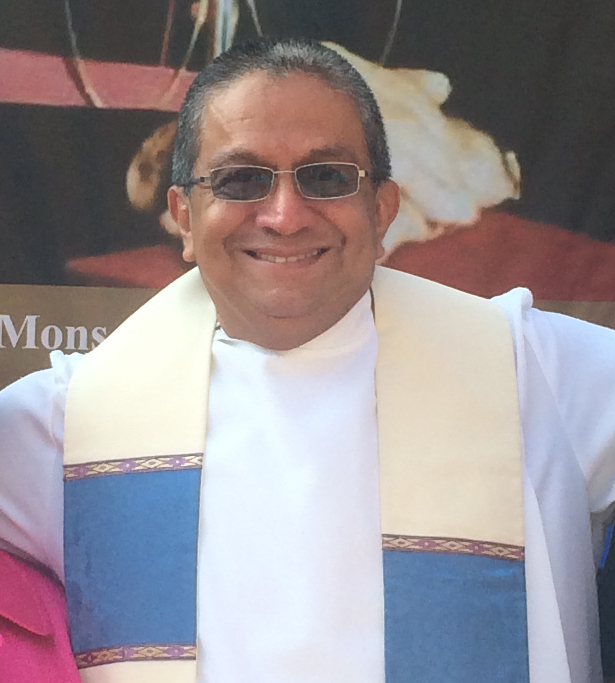 "I am a CISPES supporter because continuing to fight for social justice and a more people-centered country means continuing the dream and sacrifice of thousands of my fellow Salvadorans who died for that vision.” - Padre Carlos, New York City